Fire Alarm System Maintenance Panel Key Switch 24V Conventional Fire Security Monitor
Key Specifications
https://www.vedardsecurity.com/conventional-fire-alarm-system-maintenance-panel-switch-p-22
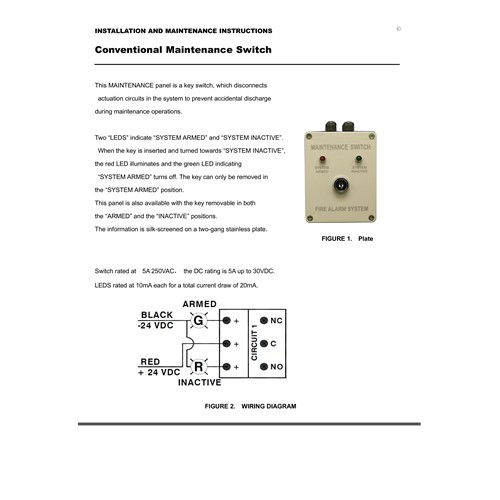
A fire alarm system maintenance switch is a key-operated safety device that disables critical output circuits during service to prevent accidental alarms or suppression discharge. It ensures technician safety and avoids unwanted building evacuations.
Disconnect Release/Actuation Circuits
Cuts power to suppression agents (e.g., CO₂, clean agent) or notification appliances (horns, strobes).
Prevents accidental discharge or alarm during testing/repair.
Two-State Operation with LED Indicators
ARMED (Green LED): System active, circuits connected, normal protection.
INACTIVE (Red LED): Maintenance mode, circuits disconnected.
Key-Lock Security
Key removable only in ARMED position (prevents leaving system unsecured).
Restricted access to authorized personnel only.
System-Wide or Isolated Control
May disable entire system or specific zones/circuits.
Preserves supervisory signals (trouble alarms often remain active).
Facilitate Testing & Maintenance
Allows sensor/module testing without triggering building-wide alarms.
Enables safe replacement, cleaning, or troubleshooting of devices.
Typical Wiring & Specification
Power: 24 VDC (fire alarm standard).
Contacts: Form C (SPDT), rated 5A @ 250VAC / 30VDC.
Terminals: Common (C), Normally Open (NO), Normally Closed (NC)
Applications
Fire alarm control panels (conventional/addressable).
Suppression release systems (clean agent, sprinkler pre-action).
Notification appliance circuits (NACs).
Safety Note
Always return switch to ARMED after maintenance; verify green LED is lit.
Document all maintenance switch operations in the system log.