Each year, asmag.com compiles the Security 50 report about the top companies in security and explores the latest developments in the industry. How did security fare this year, and how do top companies see the road ahead?
We asked high-level officials from three distinguished top 10 companies to share their views and insights in this Q&A session with:
- Vivianna Wong, VP, Hikvision International Business Center
- Bob Chen, Senior Vice President & President of Global Business, Dahua Technology
- Ray Mauritsson, CEO, Axis Communications
- Chaewon Jeff Lee, Head of Global Sales & Marketing, Vice President, Hanwha Vision
 Vivianna Wong,
VP, Hikvision International Business Center
asmag: How do you see the state of the security industry in 2026? What have been the main growth drivers this year, and what opportunities are you expecting to emerge in 2027?
Vivianna Wong (Hikvision): From Hikvision’s perspective, 2026 has been another year of stable growth as security remains a fundamental need for society and businesses of all sizes. Meanwhile, AI is accelerating the industry’s shift toward smarter, more intelligent security solutions.
Large-scale AI models are among the most transformative innovations in the industry. While traditional AI models have enabled applications such as license plate and object recognition at scale, large-scale models bring stronger generalization, multimodal understanding, and reasoning capabilities. This enables the industry to address more complex challenges and unlock new opportunities for scenario-based digitalization.
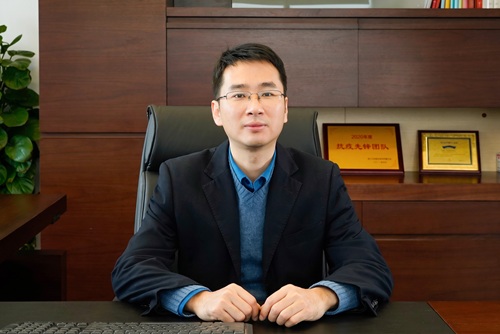 Bob Chen,
Senior Vice President & President of Global Business,
Dahua Technology
Bob Chen (Dahua): In 2026, the physical security industry is moving from experimenting with AI to putting AI to work. Over the past few years, large AI models have been a major focus of discussion across the industry. Today, however, customers are less concerned with how powerful a model is in isolation and more focused on whether it can be applied to their own operations and deliver a measurable return.
We see two clear shifts. First, AI is moving from recognizing individual objects to understanding complete scenarios and behavioral sequences. This is helping turn the massive volume of alarms and video data into actionable intelligence that can be investigated and acted upon. Second, the integration and modernization of existing systems have become increasingly important. Customers want to connect previously siloed video, access control and sensing systems, so that security data can support not only security operations but also broader business efficiency.
These two areas have been important growth drivers this year. Technologies such as multimodal AI and edge intelligence are becoming more mature, making solutions more accurate and easier to deploy, while applications are expanding beyond traditional security into areas such as smart city management, transportation, energy and industrial safety.
Looking ahead to 2027, we see greater opportunities in closing the loop. AI will move beyond simply identifying problems to connecting perception, analysis, decision-making and execution, enabling more capable industry-specific AI agents. At the same time, deeper convergence between physical security, cybersecurity and operational systems will create new opportunities for security-as-a-service. Ultimately, customers will continue to invest in outcomes they can measure—fewer false alarms, faster response and better-informed decisions.
 Ray Mauritsson, CEO, Axis Communications
Ray Mauritsson (Axis): As the need for security continues to grow globally, so does our market. In 2026, we see a landscape where a combination of edge computing and cloud management is becoming the industry standard. We are seeing steady, robust demand, especially in sectors that prioritize resilience, such as data centers.
The primary growth drivers this year have been the advancement of Edge AI, the integration of network audio for automated deterrence, and a broader push toward modernizing legacy setups with open, cybersecure systems. Looking toward 2027, the biggest opportunity lies in expanding what security technology can do. We are moving beyond traditional security to a world where cameras and IoT sensors drive operational efficiency, helping businesses optimize everything from manufacturing workflows to retail foot traffic, and turning security assets into data-driven business tools.
 Chaewon Jeff Lee,
Head of Global Sales & Marketing, Vice President,
Hanwha Vision
Chaewon Jeff Lee (Hanwha): In 2026, the global physical security market maintained stronger demand than initially anticipated, demonstrating remarkable resilience despite persistent geopolitical uncertainties. A primary growth engine this year has been robust investment in large-scale infrastructure projects—most notably AI data centers—coupled with the rapid adoption of AI-powered video technologies across diverse vertical sectors, including industrial safety, smart manufacturing, and retail.
Looking ahead, 2027 will present an operating landscape where formidable challenges and strategic opportunities coexist. As hardware component costs rise, supply chain volatility lingers, and geopolitical headwinds persist, end-users will approach investment decisions with greater caution, likely widening growth disparities across geographic regions.
In this demanding environment, competing strictly on hardware specifications or isolated product features is no longer enough; companies must tangibly prove real-world business value. Hanwha Vision is dedicated to providing solutions that optimize Total Cost of Ownership (TCO) throughout the entire operational lifecycle, well beyond initial acquisition expenses, supported by our secure supply capabilities and disciplined cost competitiveness. When operating within volatile markets, sustained industry leadership will ultimately belong to enterprise partners that reliably safeguard their customers' cost efficiencies and operational business continuity.
asmag: In your view, what innovations are having the most transformative impact on physical security right now, and how have they influenced your sales and R&D pipeline?
Bob Chen (Dahua): Over the past two years, AI has been steadily pushing the technology paradigm of physical security forward. From Dahua’s experience, three areas stand out and have become important areas of investment for us.
The first is the combination of multimodal AI and vision foundation models. AI is no longer limited to recognizing people or vehicles in a scene; it is increasingly able to understand a complete situation or sequence of behavior—what is happening and what it may mean. This allows a growing amount of video and alarm data that previously required manual review to be analyzed automatically.
The second is AI agents. Systems are beginning to work with people through natural language, turning tasks such as searching video footage, identifying clues and checking response procedures—activities that traditionally relied heavily on experience—into conversational and repeatable workflows. This is changing how security teams work.
The third is intelligence at the edge. By bringing AI capabilities closer to where data is generated, systems do not have to send every task back to a central platform. This enables faster response, more efficient use of computing resources and better adaptation to real-world environments.
These developments are closely connected: they are all helping security systems move from simply “seeing” to understanding and taking action. Dahua’s Xinghan Large-Scale AI Models are designed around this direction, with vision, multimodal and language model capabilities. Through collaboration between large and small models, we aim to balance intelligence, accuracy and the practical cost of deployment. We are already seeing results in real-world applications. For example, on highways, large-model-based secondary analysis of video has helped significantly reduce invalid alarms and the workload for manual review, while also accelerating emergency response.
These developments are also directly shaping our R&D and go-to-market priorities. On the R&D side, rather than focusing solely on model parameters, we are investing more in edge deployment, multimodal understanding and the engineering capabilities needed to coordinate cloud, edge and endpoint systems. In practice, deployment and scenario adaptation are often just as important as the model itself. On the market side, we are increasingly developing scalable industry solutions around customers’ workflows rather than treating AI as an isolated feature. AI projects that were previously more pilot-oriented are increasingly moving toward broader deployment and becoming a more integral part of our business.
Ray Mauritsson (Axis): The most transformative impact comes from the convergence of edge AI and next-generation efficiency. By processing analytics and generating metadata directly on the device, we are not only saving bandwidth but also significantly enhancing privacy. When you pair that with innovations like AV1 compression, which drastically reduces storage and network demands without sacrificing image quality, customers gain considerably more value.
This has also shifted our R&D pipeline. Software is increasingly driving hardware development. We are investing heavily in open cloud platforms, such as Axis Cloud Connect, to enable remote management without the constraints of closed ecosystems. This evolution has also changed our sales dialogue. We are no longer speaking only with security managers – we are now engaged in in-depth strategic conversations with CIOs and IT directors who prioritize cybersecurity and long-term architectural scalability.
Chaewon Jeff Lee (Hanwha): At present, the core of innovation in physical security is undeniably artificial intelligence, but the true breakthrough lies not in the technology itself, but in how AI fundamentally transforms the role of security solutions. Rather than merely detecting and classifying objects, video systems are evolving toward comprehensively understanding complex contexts and proactively supporting necessary actions—a progression leading directly to 'Agentic AI.'
Customer expectations have similarly shifted from simply asking "Does this feature AI?" to asking "What tangible business value does AI actually deliver to our operations?" In response, Hanwha Vision's R&D and commercial pipeline is structured around three strategic pillars:
AI Innovation: Moving beyond generic feature sets toward purpose-built solutions that seamlessly integrate into the customer's actual operational workflows.
Cost Competitiveness & Supply Resilience: Implementing modular, flexible architectures and value-engineering optimizations to guarantee stable component procurement while delivering an attractive, sustainable TCO.
Regulatory Readiness: Proactively complying with increasingly rigorous cybersecurity and AI regulatory standards worldwide, including the EU AI Act and India’s STQC certifications.
By advancing these three pillars concurrently, we ensure our security portfolio remains technologically cutting-edge, commercially competitive, and globally compliant.
asmag: What has been at the center of your business strategy in the past year, and what direction are you planning to take going forward?
Vivianna Wong (Hikvision): Our strategy focuses on scenario-based digitalization and AIoT, powered by large-scale AI models and advanced perception technologies. Following the launch of our Guanlan large-scale AI models last year, our focus this year has been turning these capabilities into practical products and solutions that address real customer needs.
For example, AcuSeek, powered by Guanlan AI, enables users to search recorded video using natural language, finding specific events in seconds simply by describing what they are looking for.
This year, we have also introduced products featuring the new Guanlan AI Encoding technology, which helps customers address the challenge of rising video storage costs. By preserving the clarity of people, vehicles, and other key targets while compressing less relevant image areas, the technology can reduce storage requirements by 30% to 50% on average without compromising critical visual details.
Looking ahead, we will continue to bring AI into practical applications, helping customers solve real-world challenges and create greater value through digitalization.
Bob Chen (Dahua): Over the past year, we have been focused on more closely connecting Dahua’s long-standing capabilities in multidimensional sensing with the capabilities of large AI models.
On the technology side, we have continued to expand our sensing capabilities and strengthen the intelligent platforms built on top of them. At the front end, we are extending our capabilities across visible light, infrared, radar, acoustic and other sensing technologies. At the back end, we are using the Xinghan Large-Scale AI Models and industry-specific AI agents as key enablers to connect the full chain from perception and understanding to decision-making and execution.
From a business perspective, Dahua is primarily focused on two core directions: helping cities achieve more efficient governance, and helping enterprises improve both security and operational efficiency. Rather than pursuing broad coverage across every possible industry, we prioritize the most critical and high-impact scenarios where we have strong industry expertise and where customer pain points are most clearly defined. We aim to develop tailored industry-specific AI models and solutions for these scenarios, deepening our expertise in priority industries and delivering tangible value.
Looking ahead, we will continue along this path, with a strong focus on scenario-driven innovation and engineering-led deployment. We will further strengthen the end-to-end connection from algorithms to real-world implementation, while working with ecosystem partners to build an open and collaborative environment. Ultimately, our goal is to make intelligence work effectively in the real world—where physical environments are complex, dynamic and constantly changing.
Ray Mauritsson (Axis): Over the past year, our strategy has centered on delivery reliability, scaling up production, and expanding our global Experience Centers to get closer to our customers. We’ve also focused on strengthening our strategic alliances with IT leaders, such as Cisco and Palo Alto Networks, to ensure our ecosystem is as robust as possible.
Moving forward, our growth strategy builds on our market leadership in network video, which we will continue to strengthen. At the same time, we are scaling high-growth categories like network audio and access control. In addition, we are investing in next-frontier technologies such as direct-to-cloud solutions and operational efficiency tools. We remain fully committed to our two-tier partner model because we believe that growing alongside our distributors and system integrators is the only way to ensure sustainable, long-term success.
asmag: Beyond technology and growth, how do you see the role of the security industry as a partner for clients across all sectors evolving? What responsibilities or opportunities do you think companies should embrace beyond delivering security solutions?
Vivianna Wong (Hikvision): The security industry is evolving from protecting people and assets to becoming a broader partner in customers’ digitalization. As security devices become more intelligent, their applications are expanding from safety and protection to operational efficiency and risk management.
Powered by Guanlan AI, our solutions address challenges across a wide range of scenarios, including PPE detection on construction sites, fall detection in care homes, forklift detection in logistics parks, and early fire and smoke detection in mining sites. They also support more specialized applications, such as animal detection on large farms and prohibited-item detection at transport hubs. In these scenarios, AI-powered solutions can typically reduce false alarms by 70% to 90%.
This broader role also brings greater responsibility. We believe progress in the AI era requires collaboration across the industry. By opening our software and hardware capabilities to partners, we aim to foster innovation and create greater value together.
Beyond commercial applications, we are committed to using technology to address social and environmental challenges. Through our STAR Program for Social Good, we work with non-profit organizations to apply AIoT technologies to wildlife protection, forest conservation, and cultural heritage preservation.
Bob Chen (Dahua): We believe the role of the security industry is evolving from delivering security devices and systems to becoming an intelligent sensing and decision-support partner for customers operating in the physical world.
Security systems are deployed across critical environments, including cities, transportation, factories, energy facilities and retail. As these systems become more connected and intelligent, the data they generate can support not only security operations, but also operational efficiency, risk management and broader sustainability goals. This means we need to develop a deeper understanding of our customers’ businesses, help connect their systems, and turn data into actionable insights—not simply deliver a security solution and walk away.
Ray Mauritsson (Axis): The role of the technology provider is evolving into that of a trusted advisor. To succeed in this new era, companies must embrace responsibilities that go beyond the technical specifications of a product. One key area is cybersecurity by design. We view cybersecurity not as a feature but as a responsibility across the entire product lifecycle, which means providing long-term software support and regular patches. Another is the ethical application of technology. As new legal frameworks emerge, we must ensure that our technology is safeguarded against misuse. Responsibility extends to other areas as well. At Axis, for instance, we design energy-efficient, repairable products free of hazardous materials. Our goal is to be the market leader while contributing positively to society.
---
Explore further Security 50 reporting, the detailed ranking, and the results of the Security 50 reader survey.