Key Specifications
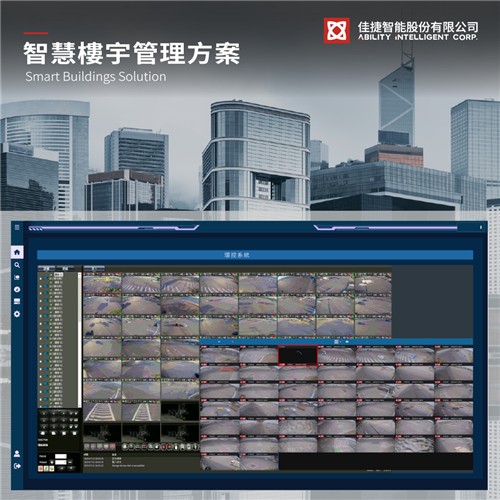
Smart buildings leverage AI, IoT sensors, and automation for efficient management of energy, lighting, HVAC, security, and access. Real-time analytics and cross-system integration boost efficiency, safety, and sustainability.
These solutions are used in offices, residences, campuses, factories, and public buildings.
In office buildings: AI cameras and facial recognition are integrated for access control and visitor management. These systems work with license plate recognition and parking guidance. Energy analytics also help optimize space utilization.
In residential communities, smart access control, public-area security surveillance, and environmental sensing (air quality, smoke, temperature, and humidity) enhance safety and quality of life.
On campuses, administrators deploy people flow detection, entrance control, and vehicle management systems to effectively improve campus safety.
In industrial parks and factories: the system integrates vehicle and logistics monitoring with equipment and personnel safety management. It also connects with energy and IoT platforms to support smart manufacturing oversight.
In public buildings: managers implement multi-layer security, issue emergency incident notifications, and integrate smart traffic to strengthen city-level operational management capabilities.
Smart buildings are key to urban operations, providing centralized monitoring, analytics, predictive maintenance, and standardized integration for greater safety and efficiency.